Palm Oil: The Next “Holy Grail” for Zamboanga Sibugay?
- Aug 22, 2016
- 3 min read
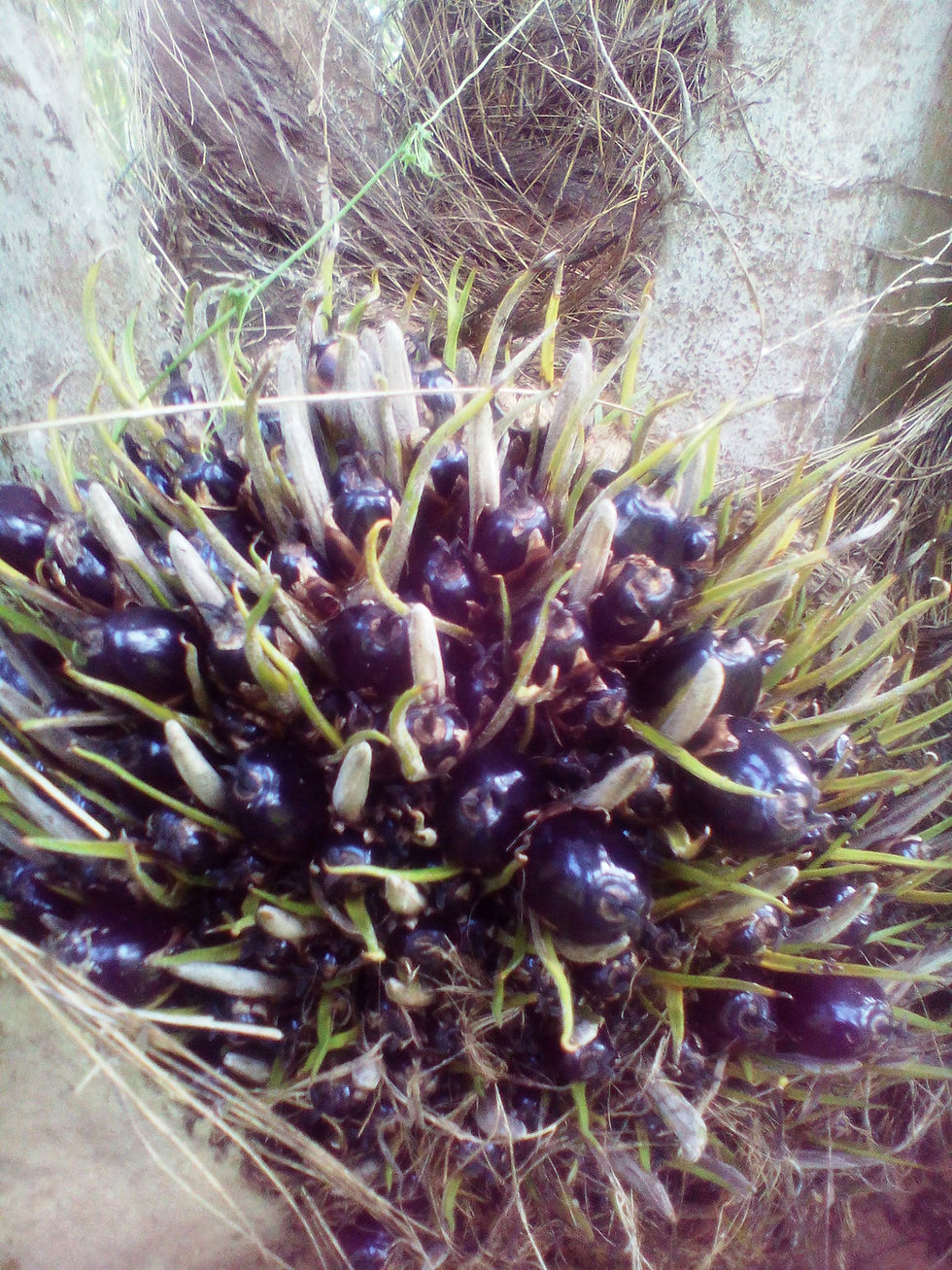


HE is a palm oil farmer by chance. “I never thought about it before,” Leonardo Talania said.
Talania, who is now the mayor of Titay town in Zamboanga Sibugay, usually spent his early morning everyday supervising the 150-hectare palm oil plantation he owns. The plantation is nestled across the border of Titay town and Kalawit town in Zamboanga del Norte.
He started planting palm oil in 2007 on a 15-hectare land after he learned about palm oil from other palm oil farmers in other parts of Mindanao.
“It was really hard at the time to plant palm oil because the seedlings were sourced from Cotabato,” he said.
But the prospect of viability of palm oil convinced him to go on.
According to Talania, unlike rubber and other crops, palm oil raw products are not prone to thief.
“It is easy for people to steal raw rubber and sell it to buyers without you knowing it,” he explained. But no chance for people to steal in the case of palm oil, he added.
Above all, he confided, palm oil farming could be a viable alternative with the problem besetting the rubber industry. The price of raw rubber plummeted to as low as P20 per kilo from more than P100 a kilo in 2004, a phenomenon attributed by industry experts as part of the world market trend.
Of Talania’s 150 hectares palm oil, 65 hectares are productive. And he expects the whole area planted to palm oil will be fully productive next year.
“In terms of financial return, the palm oil commands a higher rate,” Talania said.
At present, the 65 hectares have a total yield of 65,000 kilograms or 65 tons for every 11 days. Each ton commands a price of P4,100.
The Next “Holy Grail”?.Talania’s palm oil plantation is the first in Zamboanga Sibugay. All over the country, there are only about 70,000 hectares of land planted to oil palm.
Records have shown that the country has imported about 550,000 tons of refined palm oil, the primary processed product of palm oil, in 2011. Malaysia supplies 80 percent of the country’s requirement. The remaining 20 percent, roughly estimated at 120,000 tons, is sourced domestically.
Industry experts believe that as the country grows, the demand for palm oil will tremendously increase.
The Palm Oil Industry Development Council has estimated a potential of about one million hectares suitable for palm oil. In the province, no less than 4,000 hectares are being eyed as potential for palm oil.
Engr.Bennet Santander, an industrial engineer and former head of the Economic Planning Unit of the provincial government, said “there is a big potential for palm oil in the province”.
“It is not even an alternative to rubber because it can be developed in areas not planted to rubber,” he reasoned out.
There are vast undeveloped lands in Zamboanga Sibugay, he said. The palm oil sector of the country is presently utilizing idle and underutilized lands.
Oil palm can be grown in logged-over areas, unproductive uplands, low-yield corn lands, and cogon lands. Oil palm does not do well 500 meters above sea level, so the highlands cannot be used.
Santander shares the industry leaders’ view that developing the palm oil sector can help save
dollars through import substitution, provides jobs, and generates taxes for local communities. It will also generate taxes for local and national governments.
Downside. Palm Oil Industry leaders in the country, however, have cautioned to carefully tread in the palm oil expansion. During the two-day Responsible Business Forum on Food and Agriculture held last year, the industry leaders had raised the social and environmental issues the palm oil sector faces in Indonesia and Malaysia. They pointed out the following issues, namely: continued deforestation, increased emissions from illegal burning of trees, and the marginalization of indigenous communities.
Greenpeace asserted that clearing and burning forests for plantations contributes heavily on air pollution in Southeast Asia. Messing up with nature, environmental activists said, can lead to destructive typhoons like Pablo, Sendong, and Yolanda.
Santander, on the other hand, believes that the main barrier to optimum palm oil development in the province and anywhere in the country is that “it is beyond the capacity of the small landholders to venture into palm oil.”
“The cost of establishing the palm oil farm itself is prohibitive for small farmers,” Santander, who is a foremost palm oil farming advocate in the province, said.
The absence of palm oil refinery in the locality is another barrier, he added.
“But it is a good thing that the discussion on how to move forward the palm oil industry,” he noted.
Perhaps, Santander said, the provincial and municipal governments of the province will consider it in their development plans.
The province is the top producer of rubber of the country. But the nascent palm oil sector might yet prove to be another viable route to poverty alleviation. ###


Comments